
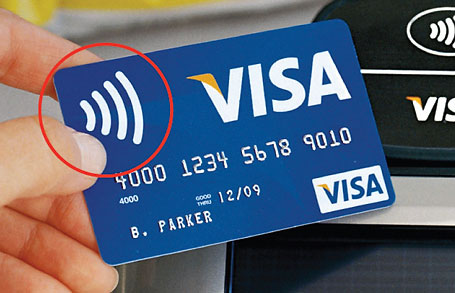
RFID Credit Cards
Most of you may not even know if you have an RFID Credit Card.
RFID credit cards, also referred to as contactless credit cards, look just like your normal credit cards, except they have a miniature built-in computer chip that uses RFID to wirelessly zap your credit card information to the payment terminal.
The advantage of having an RFID credit card is that the merchant or checkout person never touches your card. You hold your credit card within four inches of the merchant’s RFID scanner and your credit card is scanned and your transaction is processed. Many large retailers, such as CVS and McDonalds, have special readers at every register.
RFID credit cards can cut transaction times in half. RFID cards are more secure because your sales person or waiter never gets to touch it and possibly use credit card skimmers to duplicate your credit card. You don’t even have to take your credit card out of your wallet. You can just pass your wallet over the credit card reader.
Europe has embraced a similar, more secure version of the RFID card called EMV. Many gas stations, railway stations, parking garages and other businesses in Europe will not even accept a regular credit card that doesn’t have an RFID computer chip.
Credit cards with computer chips and RFID are the wave of the future. The United States has been slow to adapt these cards, but it’s coming. Visa, Mastercard and Discover have announced they will move most U.S. consumers to a version of the EMV chip cards used in Europe by mid-2013.
Now you know a little bit more about RFID credit cards. According to the credit card companies, RFID credit cards are faster, safer and more secure than ordinary magnetic credit cards. If a criminal should scan your credit card and duplicate it, it is unlikely that it could be used more than once.
Besides RFID credit cards, retailers are embracing phone devices that act as portable credit cards. All these changes will be here by the end of 2013.
pcAmerica Newsletter #452 March 20, 2012